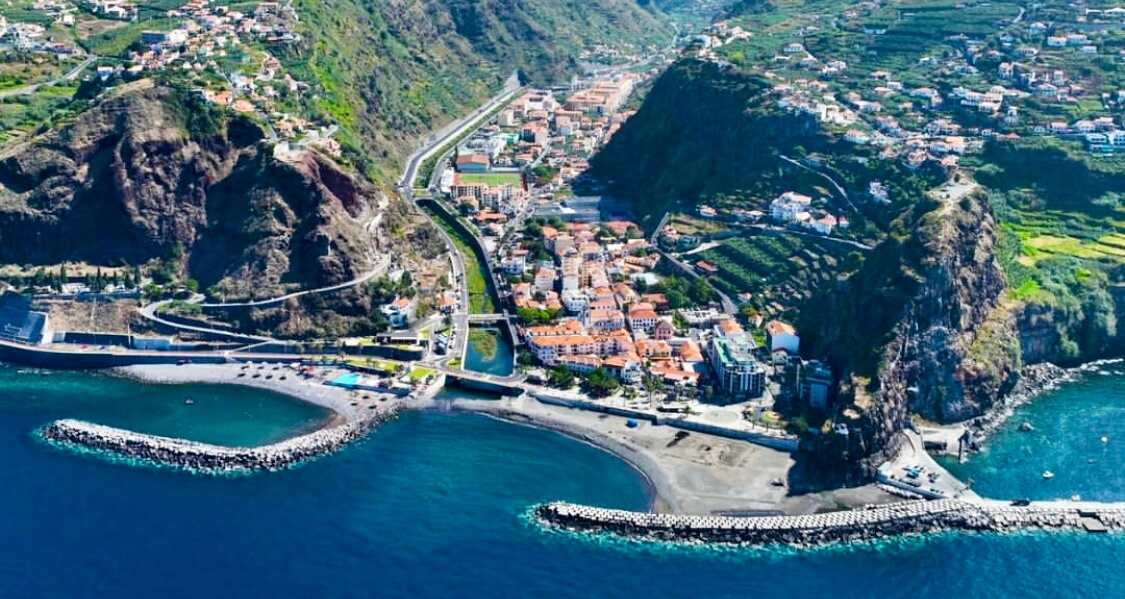
- The view
- The beach, the promenade, and the river mouth at Ribeira Brava.
- Useful for
- See if the water by the mouth has gone brown after rain.
- It will not show
- It is not the hospital, and not the inside of the church.
- A clear picture in the morning is not a promise after a downpour.
- The camera
- Image by Madeira-Web Places Live
- Getting there
- About 20 minutes from Funchal on the VR1, on the way to Ponta do Sol and Calheta.
What does this picture show, and what does it leave out?
Warm twilight light over the bay with calm sheltered south coast conditions.
It shows what is in front of the camera. It does not show the rest of the island.
Shoes you can walk in, and something for the sun.
When to go
The front and the river mouth. After rain it can run brown.
The front. After rain, the mouth can be brown.
The south-coast town on the way west. This picture is the front: beach, promenade, and the river meeting the sea. Not the hospital, and not a promise the water is clear. Brown at the mouth after rain: swim somewhere else.
About this webcam
Quick facts
- Location: Ribeira Brava, Madeira
- Category: Southwest
- Best time to watch: All day; mornings for calm sea and promenade activity
- Coordinates: 32.6669, -17.0658
Weather Information
Madeira has a mild climate year-round. Use the webcams for real-time conditions (visibility, sea state, wind).
About the area
This page belongs to the Southwest category in Madeira and groups 6 related webcams. Use the category link to explore nearby views and compare conditions.
Quick Tips for Visitors
- Check local visibility and ocean conditions via the webcam before heading out.
- Madeira weather changes fast: bring a light jacket.
- Respect signage and local guidance.
Highlights
- Historic town centre
- Beach and promenade
- Sheltered south coast
Nearby attractions
- Town church
- Promenade
- South coast viewpoints
Travel tips
- Assess entry and swell before swimming.
- Bring sun protection and water.
- Respect flags and local notices.