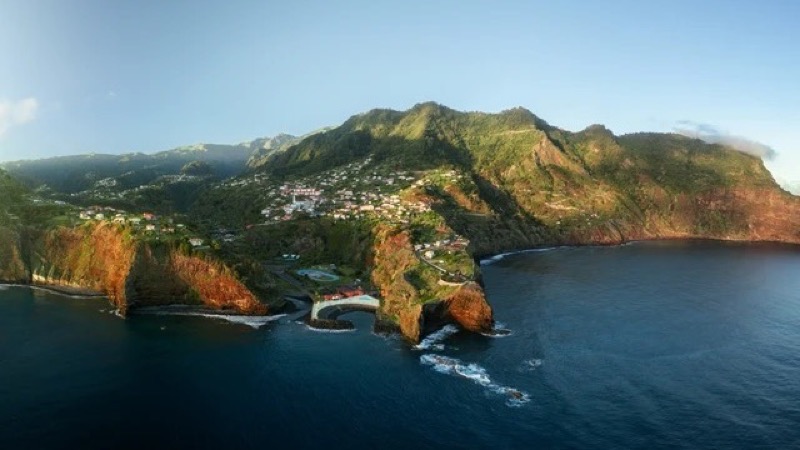
- The view
- A public lookout for this spot. Use the picture to judge cloud, light, and how busy it looks.
- Useful for
- Check the weather and the crowds before you go.
- It will not show
- You only see what this camera faces. Side paths and indoor queues are out of the picture.
- After dark you mostly see whatever lights are on.
- The camera
- Image by Madeira-Web Places Live
- Getting there
- Follow the signs for the viewpoint. Read the parking notices when you arrive.
What does this picture show, and what does it leave out?
Warm twilight light over the bay with calm sheltered south coast conditions.
It shows what is in front of the camera. It does not show the rest of the island.
Cloud cover is high, so paths and rock can be wet. Wear shoes with grip and pack a light rain shell.
When to go
The picture is the village and the rock. It is not a bus time.
The picture is the village and the rock. It is not a bus time.
Faial sits under Penha d'Águia, the big cliff on the north coast. The picture is the village and the rock. It is not a bus time.
About this webcam
Quick facts
- Location: Faial, Madeira
- Category: North Coast
- Best time to watch: Morning to late afternoon for clear rural landscape views
- Coordinates: 32.7607, -16.8278
Weather Information
Madeira has a mild climate year-round. Use the webcams for real-time conditions (visibility, sea state, wind).
About the area
This page belongs to the North Coast category in Madeira and groups 13 related webcams. Use the category link to explore nearby views and compare conditions.
Quick Tips for Visitors
- Check local visibility and ocean conditions via the webcam before heading out.
- Madeira weather changes fast: bring a light jacket.
- Respect signage and local guidance.
Highlights
- Panoramic rural and coastal scenery
- Traditional terraced agriculture
- Dramatic mountain backdrop
- Authentic northeast Madeira setting
Nearby attractions
- Faial parish center
- Guindaste Viewpoint
- Porto da Cruz coastal area
- Penha d'Águia rock formation
Travel tips
- Check local advisories and signage.
- Stay hydrated and use sun protection.
- Plan routes and timings ahead.
Photo: Luis Miguel Bugallo Sánchez (Lmbuga)CC BY-SA 4.0Wikimedia Commons