Aviation
Madeira Airport Crosswinds & Diversions: Wind Limits, 18 Mph Rumors, and What to Do When Diverted
Official ANAC wind thresholds, debunking the 18 mph cancellation myth, Runway 05 crosswind physics, passenger rights under EU 261, and live airport camera tracking.
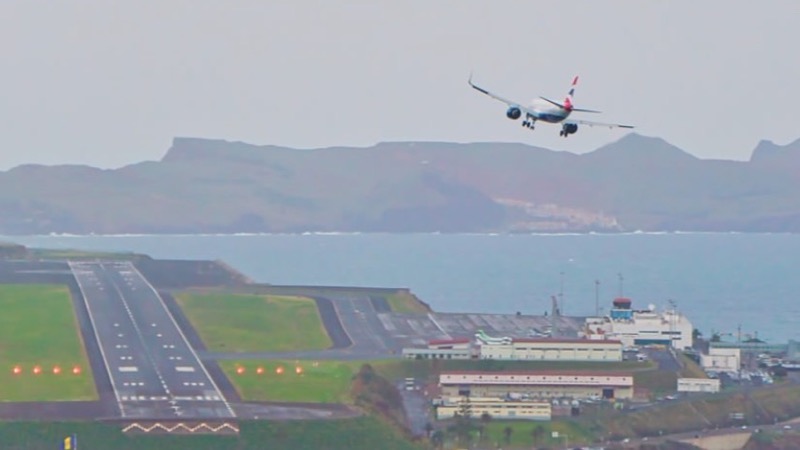
Spend a few minutes in any Madeira travel forum and you will see someone panicking over a weather forecast showing eighteen-mile-per-hour winds on their flight arrival day. Half the comments warn that their plane is doomed to divert to the Canary Islands, while others post shaky phone videos of airliners banking steeply over ocean waves. Much of that online anxiety stems from misunderstanding how aviation operations work at Cristiano Ronaldo International Airport (FNC).
Eighteen miles per hour sounds breezy on a weather app, but in aviation terms that is only 15.6 knots. Modern commercial jetliners land in 15-knot winds every single day at airports across Europe. What makes Madeira challenging is not the raw velocity of the wind, but its direction relative to the mountain ridge behind the runway. When Atlantic winds blow across the cliffs of Ponta de São Lourenço, the airflow shears into turbulent vortices and downdrafts directly over Runway 05.
Certified ANAC Wind Limits for Runway 05 and 23
The Portuguese National Civil Aviation Authority (ANAC) enforces strict, non-negotiable wind thresholds for Santa Cruz:
- Touchdown Sector (300 to 010 degrees): For Runway 05, when wind blows from the mountain quadrant behind the runway, the maximum allowed mean wind speed is strictly 15 knots. If the sustained wind exceeds 15 knots in this sector, landings are prohibited regardless of pilot experience.
- Other Runway Sectors: When winds blow more parallel to the runway centerline, certified limits range between 20 and 25 knots, depending on the aircraft type and gust spread.
- Gust Limits: Even if the mean wind sits within limits, sudden peak gusts exceeding certified margins trigger an immediate approach abort.
Because high coastal cliffs prevent the installation of a standard straight-in Instrument Landing System (ILS) glide slope on Runway 05, pilots fly a visual approach. Captains follow a curved chain of flashing lead-in strobe lights over the sea, keeping visual contact with the runway threshold while manually adjusting for wind shear before touchdown.
Specialized Captain Certification and Safety Culture
Airlines operating into Madeira must comply with stringent training protocols. Only aircraft captains who have completed specialized flight simulator training and observed check-rides are legally permitted to perform landings at FNC. First officers assist with navigation, monitor engine instruments, and call out crosswind vectors, but the captain retains hands-on control of the controls during the final approach.
When a pilot initiates a go-around (aborting the landing, applying full engine thrust, and climbing back over the ocean), this is an established safety standard rather than an emergency. It demonstrates that the flight crew is strictly following certified safety margins.
The Diversion Sequence and Passenger Rights
When persistent winds exceed operational limits, pilots follow a structured contingency plan:
- Holding Pattern: The plane circles over Porto Santo or out to sea for 15 to 30 minutes, waiting for wind gusts to drop below the ANAC threshold.
- Diversion Airports: If fuel reserves reach diversion minimums, the captain diverts to Porto Santo Airport (PXO, a 15-minute flight), Tenerife South (TFS), or Lisbon (LIS).
- Passenger Rights Under EU 261: Because weather-related diversions are legally classified as extraordinary circumstances, airlines are exempt from paying cash compensation under EU Regulation 261/2004. However, airlines retain a strict legal duty of care. The operating carrier must provide complimentary hotel accommodation, ground transfers, meals, and rebooking on the next available flight.
You can monitor incoming approaches, wind conditions, and airport operations in real time using our live Madeira Airport camera dashboard, which features multiple live runway angles and spotter views.
Questions
Short answers. For today, use the cameras. Confirm the fee on SIMplifica.
Related Articles
- Madeira Airport live conditions: cameras, crosswinds, and operations
How to monitor Cristiano Ronaldo International Airport (FNC) via live cameras, Runway 05/23 alignment, 15-knot crosswind limits, and weather delays.
- Plane spotting guide for Cristiano Ronaldo Airport
The best vantage points to watch landings at FNC: the terminal observation terrace, Santa Cruz pebble beach, and hillside restaurant balconies.
- Watching airport crosswinds: windsocks, rotors, and go-arounds
How to spot mechanical mountain rotors and crosswinds on the Madeira Airport cameras, decode windsocks, and understand pilot go-around decisions.